
Industrial Machinery Sandblasting
Our dustless industrial sandblasting clears machinery of worn coatings, scale, and rust buildup, improving the overall durability and longevity of your assets.
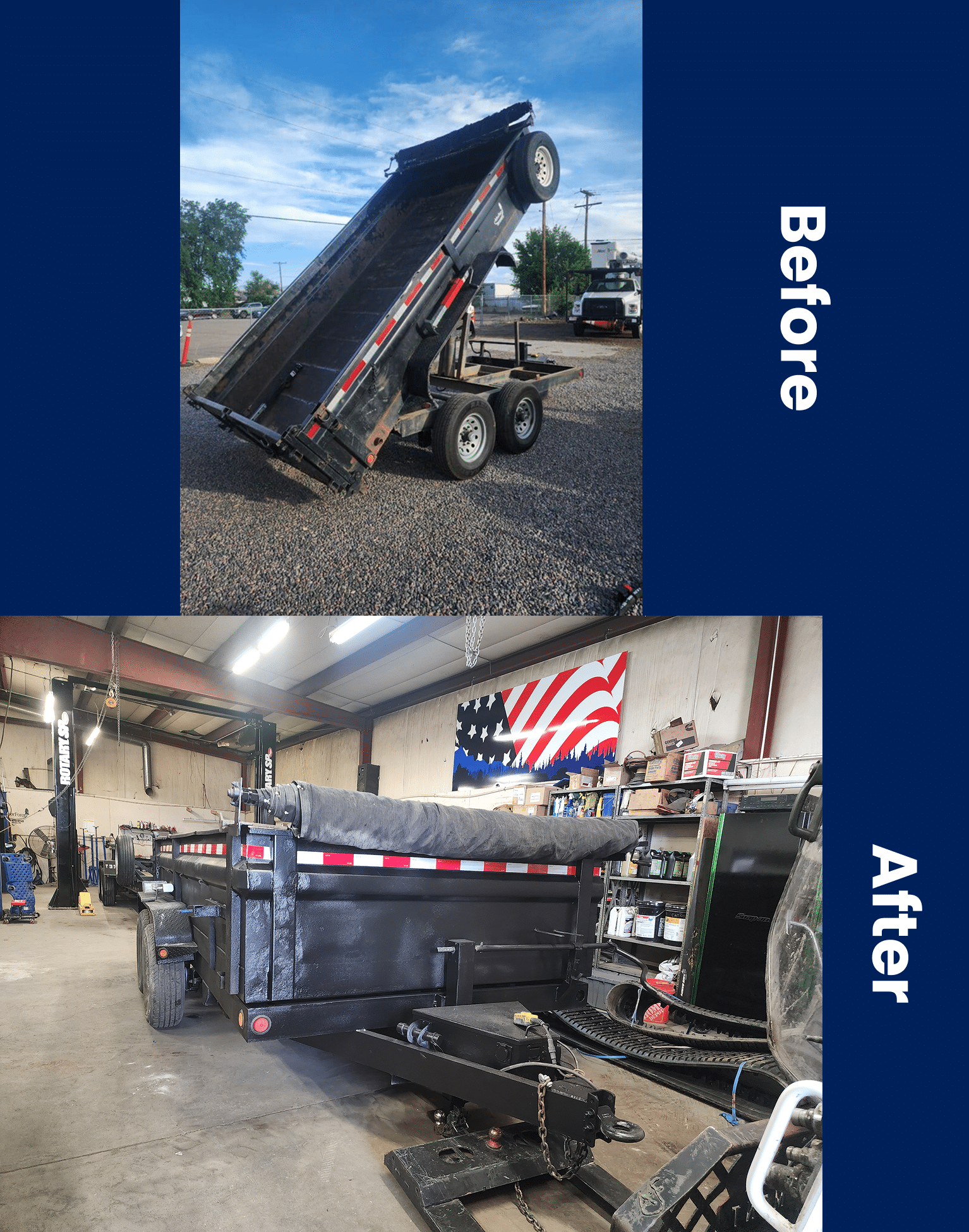
Our Industrial Machinery Blasting Process
Every heavy equipment blasting job starts with an assessment. First, we look at the coating already on the machine, the metal underneath, and the finish you’re after. Then we set the abrasive to strip the old layer and lay down the anchor profile a new coating needs to bond. Our service comes to you, keeping your equipment on-site and decreasing the time it sits idle. Fabrication shops, powder coaters, and plants count on our commercial equipment sandblasting to help restore frames, structural steel, storage tanks, and the heavy machinery that keeps a line running. We bring the same approach to agricultural operations, where our mobile farm equipment sandblasting restores tractors, trailers, and implements right where they’re parked.
Why Professional Blasting is Critical
A recoat is only as good as the prep beneath it, and an uneven profile or leftover contamination means the new finish fails early on equipment you can’t afford to pull twice. Some older coatings also hold compounds you don’t want sanded loose into the air, which is why a contained, water-fed method is best. When sandblasting heavy equipment, we blast to the specifications of the next coating, document the profile when you need it, and keep the abrasive off nearby gear and product.
Benefits
Why Choose CO Portable Blasting & Coatings for Industrial Machinery?
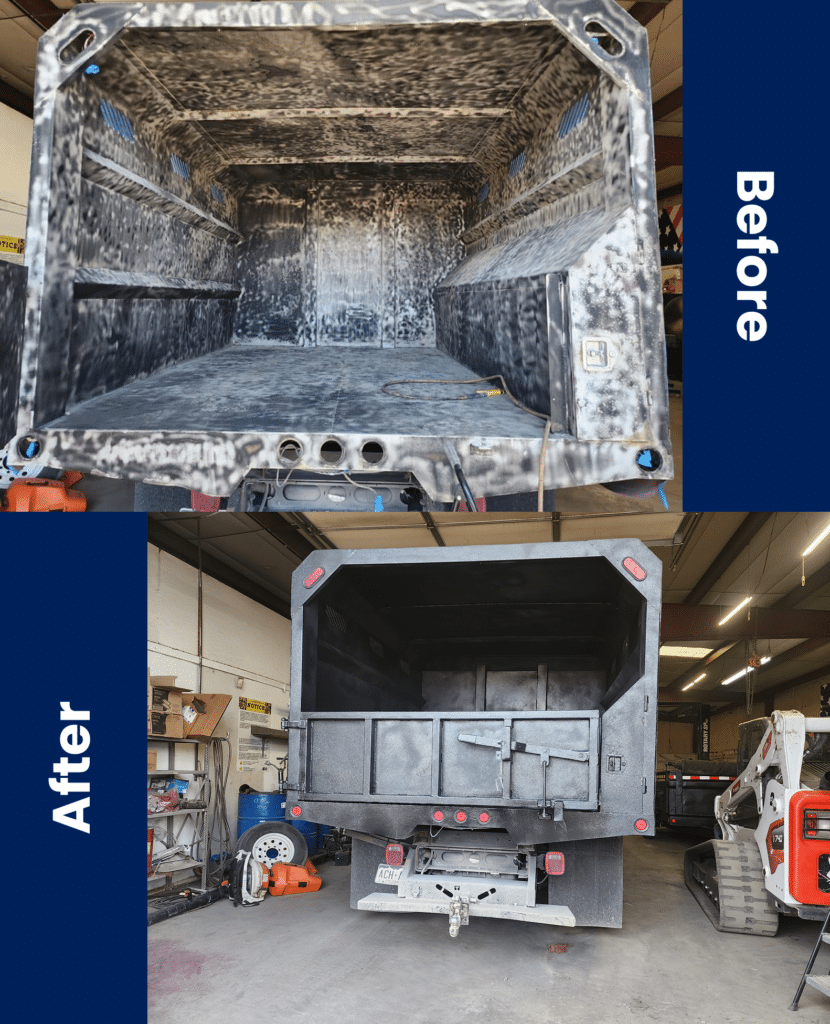
We are a family-run Colorado company that treats a plant’s downtime as seriously as the plant does, and we plan our sandblasting for heavy equipment and machinery to minimize downtime and keep you running. We can also clean up the rest of your site, from lifting oil stains on shop floors and loading docks with concrete sandblasting to clearing tags from fencing and exterior walls with our graffiti removal service.
What Our Customers Are Saying
A few words perfectly describe our experience: friendly, professional, prompt, effective, efficient—and above and beyond.
Jim embodied every one of those qualities. Not only did he restore our concrete, but he also took the time to refurbish the brick along our walkway. The results were outstanding. Our concrete looks refreshed, and our brick has come back to life—we didn’t even realize how much its appearance had faded over the years.
We truly appreciate the care, attention to detail, and hard work Jim put into this project. We are extremely satisfied with the results Colorado Portable Blasting provided and would highly recommend them to anyone looking to restore and rejuvenate concrete or brick surfaces.
Frequently Asked Questions
Why is surface preparation so important before recoating industrial machinery?
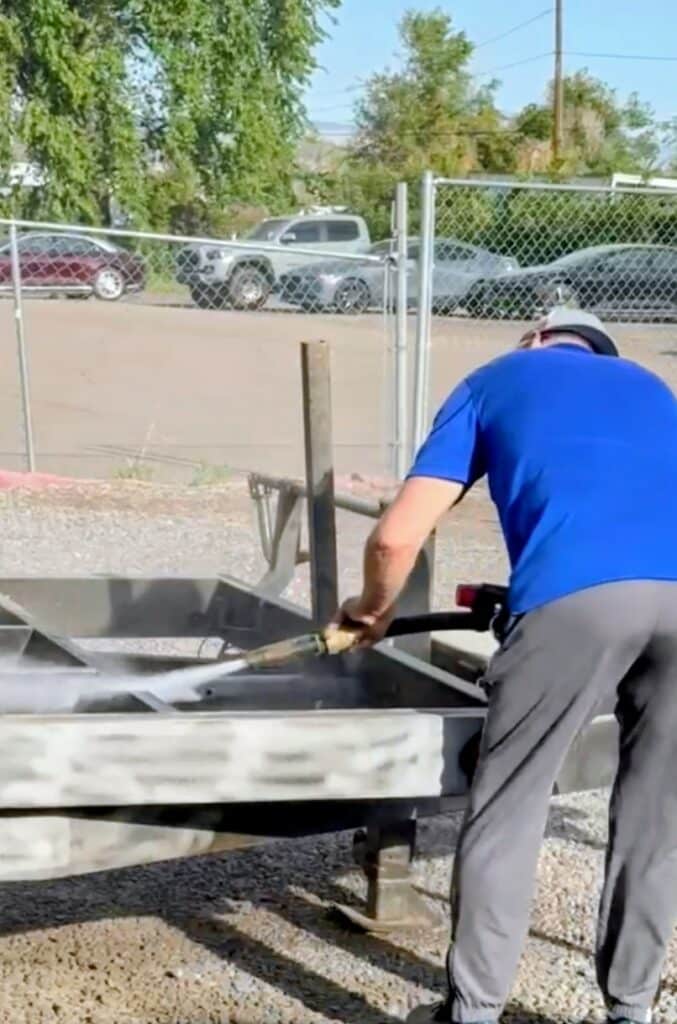
A new coating is only as durable as the surface beneath it. Industrial sandblasting removes old coatings, mill scale, rust, and contamination, then creates a consistent anchor profile that paint or powder coating can bond to. An uneven profile or leftover residue causes coatings to fail early, which means pulling the equipment out of service again.
Can heavy equipment be sandblasted on-site?
Yes. CO Portable Blasting & Coatings brings portable heavy equipment sandblasting directly to the shop floor, yard, or plant. Keeping machinery on-site reduces transport costs and downtime, and work can be scheduled around your production windows.
Is dustless blasting safe to use around other equipment and older coatings?
Dustless blasting mixes water with the abrasive, which traps grit and coating particles instead of sending them into the air or through the shop. This contained approach is well suited to older coatings that may contain compounds you don’t want airborne, and it helps keep abrasive off nearby equipment and product.
What types of industrial equipment can be sandblasted?
Sandblasting for heavy equipment and machinery covers structural steel, frames, storage tanks, production machinery, and other heavy equipment. Each job is blasted to the specifications of the coating that will follow, and the surface profile can be documented when a project requires it.